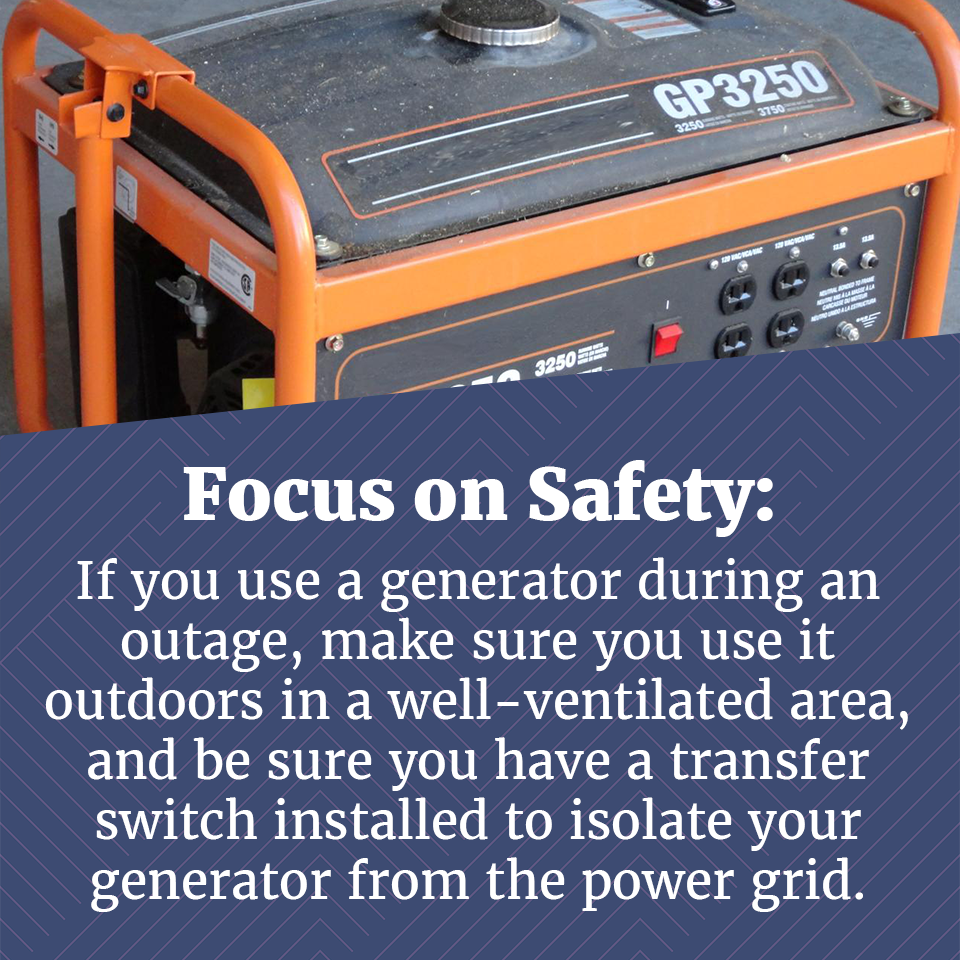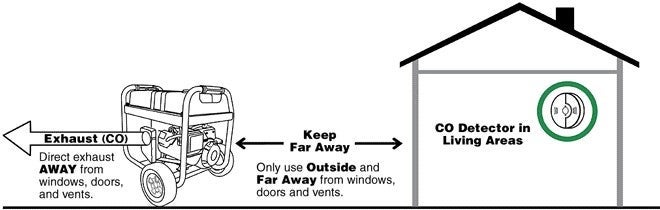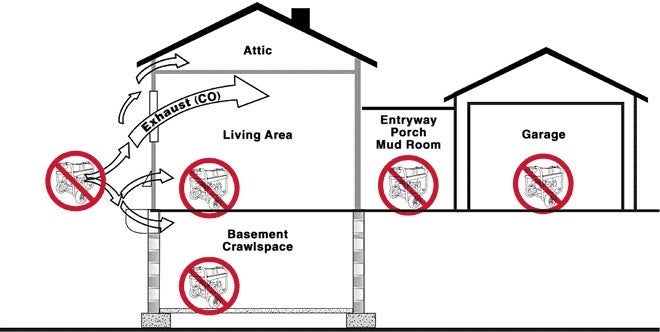
When property installed and operated, generators offer a safe, convenient mans of powering equipment when electricity is unavailable. However, improperly installed generators can be dangerous to you, your neighbors, and the cooperative’s line personnel.
An improperly installed generator can create a “back feed.” Back feeding is very dangerous. Electricity from your generator flows back through your electrical panel and into the cooperative’s electrical system. Back feeding can occur when a generator is connected to your home wiring system without disconnecting from the cooperative’s power. The most common way this could occur is if you directly connect a generator to your electrical panel or to a circuit in your home. If you feed power back into the utility system during an outage, you will energize the transformer serving your home. This poses an electrocution hazard for the cooperative’s line crews and for your neighbors, who may not realize the lines are energized. If the cooperative’s power is restored while your generator is back feeding, your generator may be severely damaged and cause a fire.
How can you use your generator and still prevent back feeding? The simple answer is to always keep generated power and the cooperative’s power isolated from each other. Two typical ways to accomplish this are:
- Permanent generator installations: Have a qualified, licensed electrician install a transfer switch between the generator and the electrical panel. The transfer switch allows power to be fed from only one source at a time, thus always keeping the generator and cooperative system isolated from each other. A transfer switch is required for permanently installed generators.
- Portable generators: If a transfer switch is not installed, appliances will need to be plugged directly into the generator using an extension cord. As long as the appliances are not hard-wired to the building’s electrical panel, there is no path back to the panel to cause a back feed onto the power lines. DO NOT plug the portable generator into any outlets in your house or any electrical panels. This will cause a dangerous back feed condition and can damage your electric system and cause a fire.
The information and images above and below were compiled from the Portable Generator Manufacturer's Association and the Electrical Safety Foundation.